
What Do Coilovers Actually Do? A Beginner’s Guide to Coilover Suspension
11 min reading time
11 min reading time
New to coilovers? This beginner’s guide explains what coilover suspension actually does, how it changes ride height and handling, and what to know before fitting coilovers to your car.
If you’re new to car modding, coilovers can sound more complicated than they really are.
You’ll hear people talk about lowering the car, improving stance, making the suspension stiffer, adjusting the ride height, changing spring rates, setting preload and getting the perfect fitment. But what do coilovers actually do?
In simple terms, coilovers replace part of your standard suspension with an adjustable suspension setup. They allow you to lower your car, fine-tune how it sits, and change how the vehicle feels on the road.
Let’s break it down.
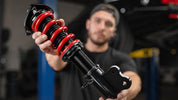
A coilover is a type of suspension where the coil spring sits over the shock absorber. That is where the name comes from: coil over shock absorber.
On most cars, the factory suspension uses shocks and springs to support the vehicle, absorb bumps and help keep the tyres in contact with the road. In some suspension setups, the spring and shock are separate. In others, especially around the front strut area, they are packaged together.
A coilover suspension kit brings the spring and damper together as one complete suspension unit. This means the spring and damper are designed to work together, rather than mixing random new springs and dampers and hoping they behave properly.
That matters because your suspension system does a lot more than just stop the car bouncing around. It controls how the car reacts when you brake, accelerate, turn into a corner, hit rough roads or go over bumps.
Coilovers give you more control over how your car sits and feels.
The main thing most people notice first is ride height. With coilovers, you can raise or lower the car by adjusting the collars or spring perch on the threaded body of the coilover. This lets you lower the ride height to improve the look of the car and reduce arch gap.
That’s the stance side of things.
But coilovers also affect how the suspension behaves. Depending on the coilover kit, the spring rates, damper setup and level of adjustment can all change how the car handles.
A good set of coilovers can:
lower your car
reduce body roll
improve handling
make the car feel more planted
help with wheel fitment
give you more control over ride height
replace tired stock suspension components
make the car look sharper and more aggressive
In short, coilovers offer both visual and driving benefits.
One of the most common questions is whether you need coilovers or lowering springs.
Lowering springs are usually the simpler option. They replace the factory springs and lower the vehicle by a fixed amount. That can work well if you just want a small drop and you are happy with the height they give you.
The issue is that lowering springs do not usually give you the same level of adjustment. Once they are fitted, the height is the height. If the car sits too high, too low, or slightly uneven from side to side, there is not much you can do without changing the springs again.
Coilovers are adjustable. That is the big difference.
Adjustable coilovers let you dial in the ride height more accurately. Want the front a touch lower? Want to bring the rear up slightly for better clearance? Want to get the fitment sitting right with your wheels? Coilovers allow you to make those changes.
That adjustability is why many drivers choose coilovers instead of just fitting lowering springs.
Most coilovers use a threaded shock body or adjustable spring perch. You move the collars up or down on the thread to change where the spring sits. This changes the height of that corner of the car.
The important part is that you should adjust the suspension evenly and carefully.
When setting ride height, you are not just looking at how low the car can go. You also need to think about:
ground clearance
wheel and tyre fitment
suspension travel
rubbing
driveshaft angles
camber
how the car drives on the road
Going lower looks good, but too low can cause problems if the car starts rubbing, bottoming out or losing usable suspension travel. That is why correct setup matters.
A little patience here goes a long way. Fit coilovers properly, set the ride height, let the car settle, check each corner, then make final adjustments.
Yes, coilovers can improve handling, but it depends on the car, the coilover kit and how everything is set up.
When you lower the vehicle, you lower the centre of gravity. This can help reduce body roll and make the car feel more stable through corners. A quality coilover can also give the car a more controlled feel compared with tired factory suspension.
The damper is a big part of this. The damper controls how the suspension moves after it hits a bump or after the car shifts weight. Without proper damping, the car would continue bouncing after every movement.
Some coilovers with adjustable damping allow you to adjust rebound or compression settings. This gives more control over how firm or soft the car feels. Not every type of coilover has the same adjustment, so it is worth checking what the kit offers before you buy coilovers.
For most street cars, the goal is not to build a full track car. The goal is usually a suspension upgrade that looks better, feels sharper and still works for everyday driving.
Usually, yes.
Coilovers often feel stiffer than standard suspension because they are designed to give more control. That does not automatically mean they have to be uncomfortable, but you should expect the car to feel more direct.
A softer factory suspension setup is normally designed for comfort first. It is made to handle school runs, motorways, potholes, speed bumps and every type of driver. Coilover suspension is aimed more at drivers who want a lower look and more control.
That means you may feel more of the road. On smooth roads, the car can feel more planted. On rough roads, a very low or very stiff setup can feel harsher.
This is where choosing the right coilover kit matters. The best setup is not always the lowest or stiffest option. For a daily driver, you want a balance between stance, comfort and control.
Spring preload is the amount of pressure already applied to the coil spring before the suspension is carrying the full weight of the car.
This is one of those terms that sounds more confusing than it needs to be. Preload does not simply mean “make the car lower”. It affects how the spring sits and how the suspension begins to move.
On many street-focused coilovers, you should avoid randomly winding preload in or out without understanding what you are changing. Incorrect setup can reduce comfort, affect suspension travel and make the car behave badly.
If you are unsure, follow the coilover kit instructions or speak to someone who knows suspension setup properly.
There are different types of coilovers, but most buyers will come across a few common options.
These let you adjust the ride height of the vehicle. This is the main reason most people get classic coilovers.
These include adjustable dampers, allowing you to change how firm or soft the suspension feels. Depending on the kit, this may affect rebound, compression, or a combined damping setting.
These are designed for normal road use, giving you a lower ride height and improved handling without going too extreme.
These are designed more for track use, where stiffness, response and adjustability are usually more important than everyday comfort.
For most drivers, a good street coilover system is the right place to start.
No, but let’s be honest: looks are a big reason people buy them.
A lower car with the right wheels and fitment just looks better. Coilovers let you adjust the ride so the car sits how you want it to sit. That is why they are so popular in the stance and car modding scene.
But coilovers are not only about appearance. They can also improve handling, reduce body roll and make the car feel more connected to the road.
The mistake is thinking coilovers are magic. They will not fix every suspension problem on an old car. If your bushes, top mounts, drop links or other parts are worn, fitting new coilovers can sometimes make those issues more obvious.
So before you install coilovers, it is worth checking the rest of the suspension too.
In many cases, yes.
A coilover kit is usually replacing the original spring and shock setup with a new spring and shock absorber arrangement. Depending on the vehicle, the rear suspension may use a separate spring and shock rather than a true coilover unit, but the kit is still designed as a complete suspension upgrade.
That is why it is important to buy the correct kit for your exact car.
Not every kit will fit every model. Engine size, model year, front strut diameter and suspension layout can all affect fitment. Always check the product details before ordering.
If you are mechanically confident and have the right tools, you may be able to fit coilovers yourself. Plenty of enthusiasts do.
However, suspension is not something to guess with. If you are not confident, use a professional.
When installing coilovers, you need to make sure everything is seated correctly, tightened correctly and installed in the right order. You should also avoid damaging the shock piston rod during installation, as damage to the shock can cause leaks and failure.
After fitting new coilovers, it is also sensible to get the alignment checked. Lowering your car can affect suspension geometry, camber and how the tyres sit on the road.
A proper alignment helps the car drive straight, handle better and avoid uneven tyre wear.
They can be, yes.
A lot of people use coilovers on daily driven cars. The key is choosing the right coilover kit and setting the car up properly.
If you slam the car as low as possible, run poor wheel fitment and leave yourself barely any ground clearance, daily driving will obviously be harder. Speed bumps, steep driveways, rough roads and multi-storey car parks will become more of a challenge.
But if you choose a sensible ride height and leave enough clearance, coilovers can work well on a daily driver.
The sweet spot for most people is simple: low enough to look good, high enough to still use the car.
Before you buy coilovers, ask yourself what you actually want from them.
Do you mainly want to lower the car?
Do you want better handling?
Do you want a firmer ride?
Do you want adjustable damping?
Do you want to improve fitment with your wheels?
Do you still need the car to be comfortable every day?
There is no single perfect suspension setup for everyone. A car used every day on rough roads needs a different setup from a weekend show car or a track car.
You should also check:
the exact make, model and year of your car
whether the kit fits your vehicle
front strut diameter if relevant
whether any extra parts are recommended
whether your wheel and tyre setup will clear
how low you actually want to go
Good coilovers give you control, but you still need to set them up properly.
Coilovers replace part of your factory suspension with a more adjustable suspension system.
They let you lower your car, adjust the ride height, improve stance, sharpen handling and change the way the car feels on the road.
For some drivers, the biggest benefit is the look. For others, it is the improved control. For most, it is a bit of both.
If you want your car to sit better, feel tighter and give you more control over the suspension setup, coilovers are one of the most popular suspension upgrades you can make.
Ready to get coilovers for your car? Find your make and model, check the fitment, and choose the coilover kit that suits how you drive.


